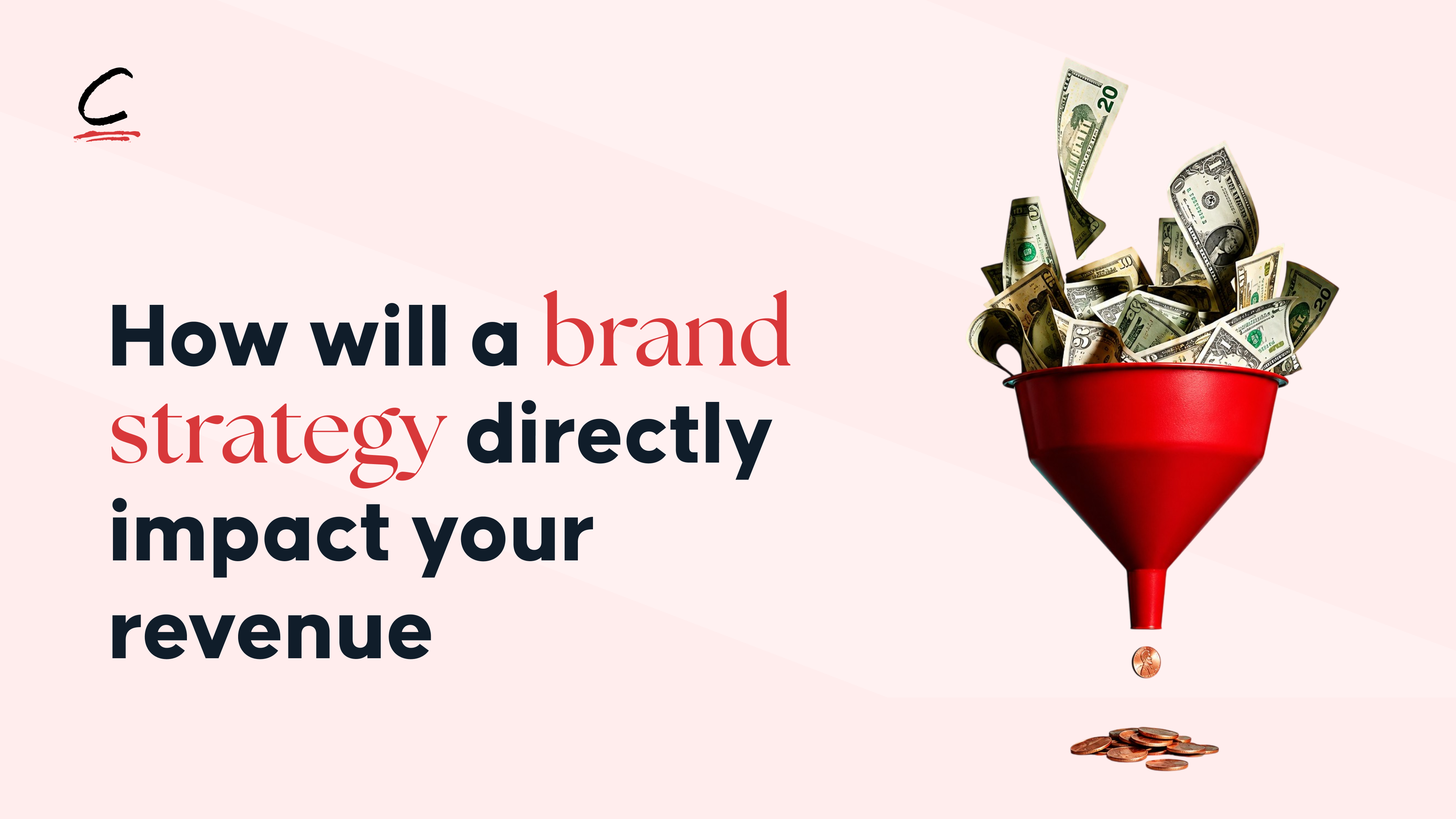
Here's the honest answer: it doesn't show up as a single line item. You won't find a row in your income statement labelled "brand strategy revenue." Instead, it shows up in three places that quietly decide whether your business grows or stalls: what you're able to charge, how much it costs you to win a customer, and how many of those customers come back or send someone else your way.
You've heard it before: "invest in your brand." But if you're watching every dollar before you launch, that advice can feel vague at best, and like a nice-to-have at worst. So let's skip the buzzwords and answer the question you're actually asking: where does brand strategy show up on your bank statement?
Think of two businesses selling near-identical products at the same price point. Six months in, one is struggling to hit targets, and the other is turning down customers because they're fully booked. The product didn't change. What changed is that one business built a brand people trust enough to choose without hesitation, and the other is still explaining itself every time a new customer shows up. That gap is brand strategy, and it's measured in every dollar, not in "vibes."
Read more: A Startup Branding Agency Checklist For High-Impact & Fast Launch.
1. Stronger Pricing Power
Customers don't compare prices in space; they compare perceived value. Two founders can sell almost the same product, and the one with a clearer story, sharper positioning, and a brand that looks like it knows exactly who it's for will consistently get away with charging more, without losing the sale.
This is why two skincare brands can sell a near-identical cream, and one charges triple the price without a single customer blinking. The higher-priced brand didn't just make a better product; it made a clearer decision about who it's for and why that person should trust it. That clarity is what customers pay the premium for, whether they realise it or not.
Brand strategy is the work that builds that perception on purpose, instead of hoping customers "just get it." It answers the questions your pricing depends on: who exactly are you for, what do you stand for that competitors don't, and why should someone pay you instead of the cheaper option next door. Without that groundwork, the default is to compete on price, which is the most expensive way to grow a business, because there's always someone willing to go lower.
2. Lower Acquisition Costs
A strategically built brand shortens the customer acquisition cost. When your message, visuals, and positioning are consistent and clear, a new lead recognises what you're about faster, and trusts you sooner. That's a lower cost of acquisition, which is a direct, measurable revenue effect, not a vague "brand feeling." It's the difference between an ad budget that compounds over time and one that resets every month.
Every dollar you put into ads or content is trying to do one job: turn a stranger into a customer. A confused or generic brand makes that job harder; people need to see you multiple times before they trust you enough to buy, which means your cost per customer keeps climbing.
Picture a customer scrolling past your ad for the third time. If your visuals, tone, and message are different every time- a different colour scheme last week, a different caption voice this week- you're not building familiarity; you're starting over with them each time. That's money spent re-introducing yourself instead of converting someone who's already seen you.
Read More: Top Branding Agencies In The UK.
3. Higher Customer Retention and Referrals
Acquisition is expensive; retention is where the real profit margin lives. Customers stay loyal to brands that feel consistent and trustworthy over time, not brands that change their look, tone, and message every few months because there was never a strategy behind them in the first place.
Referrals work the same way. Someone will only put their own name behind your business if they can describe, in one sentence, what you stand for and why they trust you. "They're just okay" doesn't get repeated to a friend. "They're the only ones who actually get (X)" does. That sentence doesn't happen by accident; it's built, deliberately, through strategy.
A defined brand strategy is what makes a business recognisable and dependable enough that customers come back without needing to be re-convinced, and confident enough in what you stand for that they refer you to someone else. That's revenue you didn't have to spend a single dollar on ads to earn.
Read More: Best Affordable Digital Marketing Strategies For Startups In The UK.
Why this matters even more before you've launched
If you're pre-launch, this isn't a "later" problem; it's the cheapest moment to get it right. Every day, founders spend money designing a logo, building a website, and writing captions with no strategy behind any of it, because it feels faster to just start. Then, a year in, they're paying again: rebranding, rewriting their "about" page, redoing the website, this time to fix the confusion the first version created, while also managing existing customers who are now confused about what changed and why.
That second round of spending is almost always more expensive than the first would have been, because now you're not just building a brand, you're also untangling one. Getting your positioning, story, and identity right before you launch means you skip that entire cycle. You're not paying twice for the same clarity; you're paying once for the version that was right from day one.
This is exactly the gap our Pre-Launch Package is built to close.
The Pre-Launch Package
For founders who want to launch with a brand that already knows how to make money, not just look good:
- Full brand identity system: logo, colours, fonts, and guidelines built around your actual positioning, not a template.
- Launch campaign & media assets: the content and visuals to introduce your brand the way it's meant to be seen from day one.
- Founder storytelling & messaging: the narrative that makes people remember you, trust you, and choose you over a competitor with a lower price.
This isn't three separate services stitched together; it's the strategy from this article, built out and handed to you, ready to launch with.
[Claim the Pre-Launch Package]
Frequently Asked Questions
How does brand strategy increase revenue?
Brand strategy increases revenue in three measurable ways: it lets you charge higher prices without losing customers, it lowers how much you spend to acquire each new customer, and it increases how many customers return or refer others, all of which affect your bottom line directly.
Can brand strategy really lower my marketing costs?
Yes. A consistent, clearly positioned brand needs fewer touchpoints to earn a stranger's trust, which lowers the cost per customer acquired from the same ad or content spend.
Is brand strategy worth it before I've even launched?
Yes, building your positioning, identity, and messaging before launch is cheaper than fixing a confused brand after customers have already formed the wrong impression of you.
What's included in a brand strategy for a new business?
At minimum, it should define who your business is for, what makes it different from competitors, and the story and message that will be used consistently across your identity, website, and launch content.












.png)


.png)

.png)




.png)

.png)