The Brand
Few film franchises carry the cultural weight of Dune. Denis Villeneuve's adaptation of Frank Herbert's book has become one of modern cinema's defining sci-fi epics – Dune: Part One and Part Two together grossing over a billion dollars worldwide, anchored by a cast that includes Timothée Chalamet, Zendaya, Florence Pugh, and Rebecca Ferguson. With Dune: Part Three (adapting Dune Messiah) set to close out the trilogy in theatres on December 18, 2026, the franchise enters its most emotionally weighted chapter yet, the fall of Paul Atreides.
A film of this scale doesn't need an agency to market it. Warner Bros. and Legendary Entertainment have their own machinery for that. So we asked a different question.
The Idea
Every agency says it's "exploring AI."Not many can show what that actually looks like in production.
We wanted to demonstrate, not describe, what CHILD is capable of when AI tools are integrated into a real media production pipeline, not as a gimmick, but as a genuine accelerant for conception, visual development, and campaign-style content at a scale most agencies can't access without a studio budget.
We chose Dune: Part Three as our canvas. With Villeneuve's trilogy closing out in theatres this December, it's one of the most visually iconic, anticipated franchises in modern cinema, exactly the kind of scale that tests whether AI-assisted production can hold up against work people already associate with cinematic quality.
This wasn't client work, and it wasn't an attempt to recreate Dune's actual marketing. It was a self-directed showcase: could CHILD use AI to produce campaign-grade concepts, fast, at a level that demonstrates real production capability?
The Brief We Set Ourselves
At CHILD, we don't only want to show what we've done for clients, we want to show what we're capable of when given the kind of scale most agencies our size never get to touch.
We set out to reimagine what a multimedia campaign for a film of this magnitude could look like if CHILD ran it, from trailer concepts to social-first static and motion content, to the kind of copywriting that could carry a campaign across IG, Facebook, and LinkedIn for a UK and global audience, without a client brief.
The Process
Dune: Part Three presented a unique production challenge from the start: unlike Parts One and Two, the film hadn't been produced yet. There was an existing storyline to draw from, Frank Herbert's Dune Messiah, but no official footage, no finalised character designs, no visual reference from the film itself. Everything had to be imagined.
AI tools became our starting point for visual ideation, generating initial concepts for motion and static content far faster than traditional production would allow.
The early outputs were striking in places. But they surfaced the first, and most significant, challenge immediately: because most elements were AI-generated, and because Dune carries such a recognizable cast and visual language, the characters needed to read as at least 80% true to their real-world counterparts. Generic AI outputs weren't enough. The resemblance had to hold.
That required a different approach. The team went back to the source, watching the films, pulling reference materials online, studying character design, costuming, lighting, and the specific visual grammar Villeneuve established across the first two installments. Only then could AI generation be directed with enough precision to produce outputs that actually matched the franchise's identity.
What followed was a process of many trials, corrections, and reworks. Outputs that looked compelling at first pass often broke down under scrutiny, a face that didn't hold, a composition that felt off, a lighting setup that betrayed its AI origins. Each iteration sharpened the team's understanding of what the tools could produce and where human judgment had to step in.
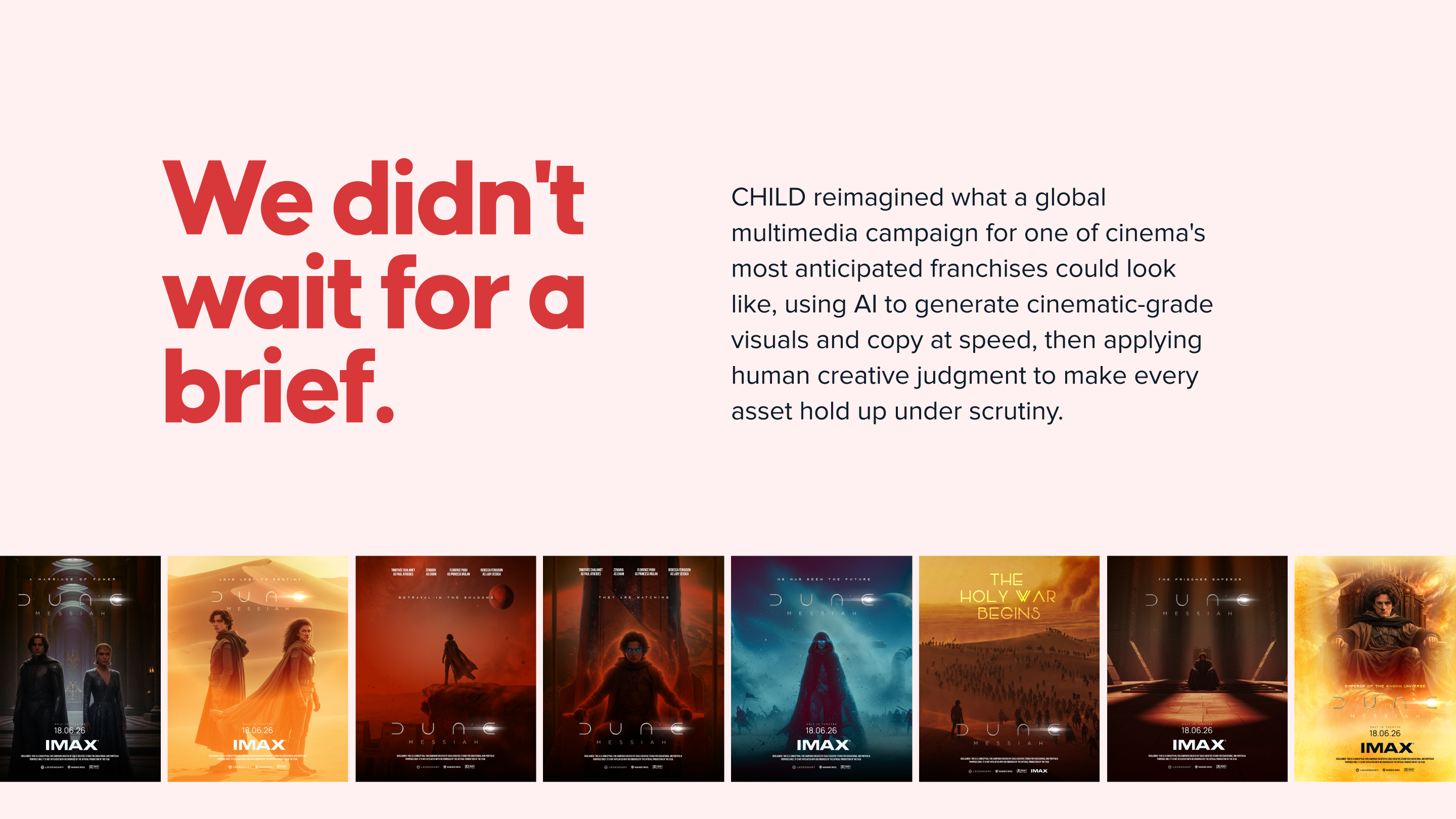
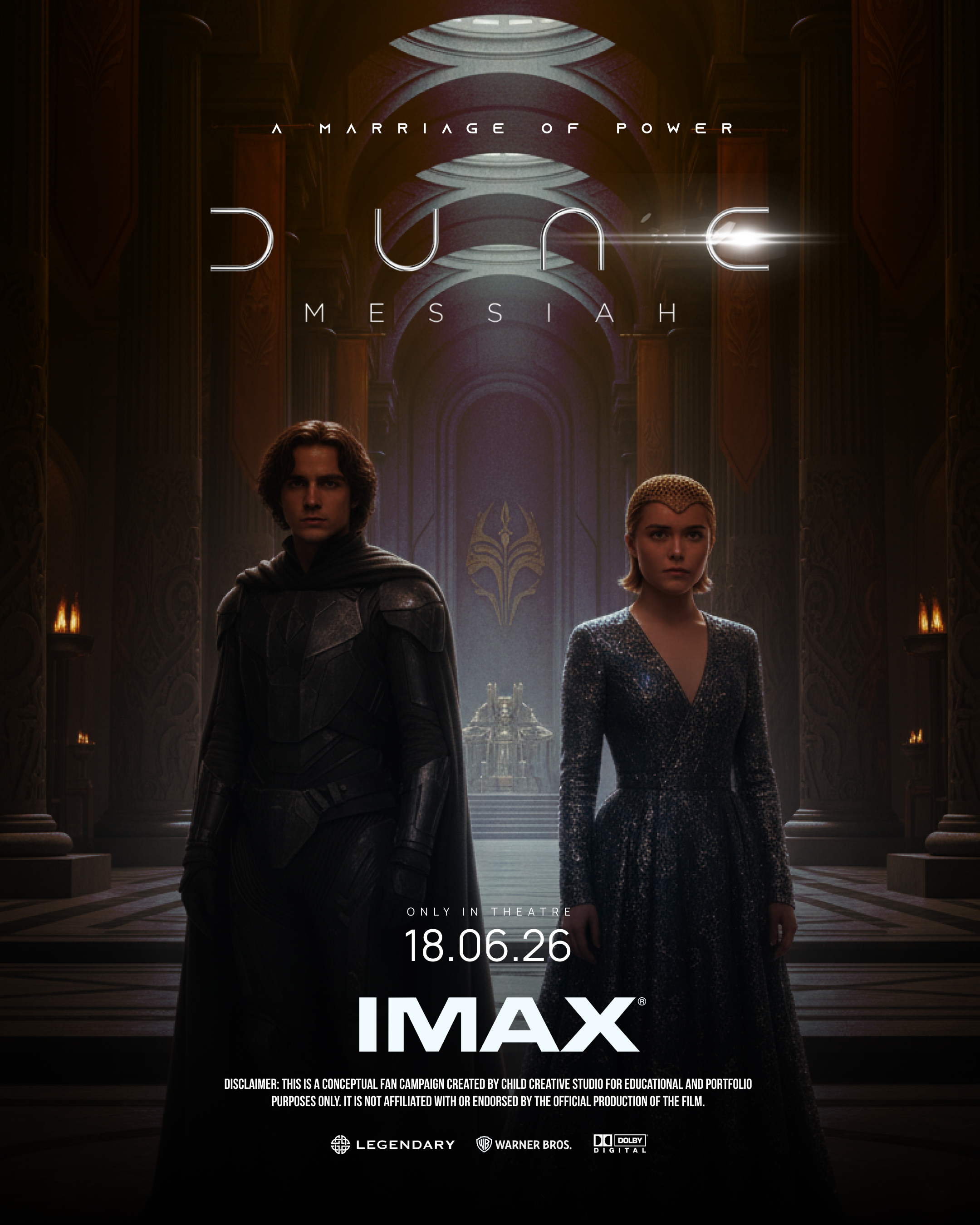
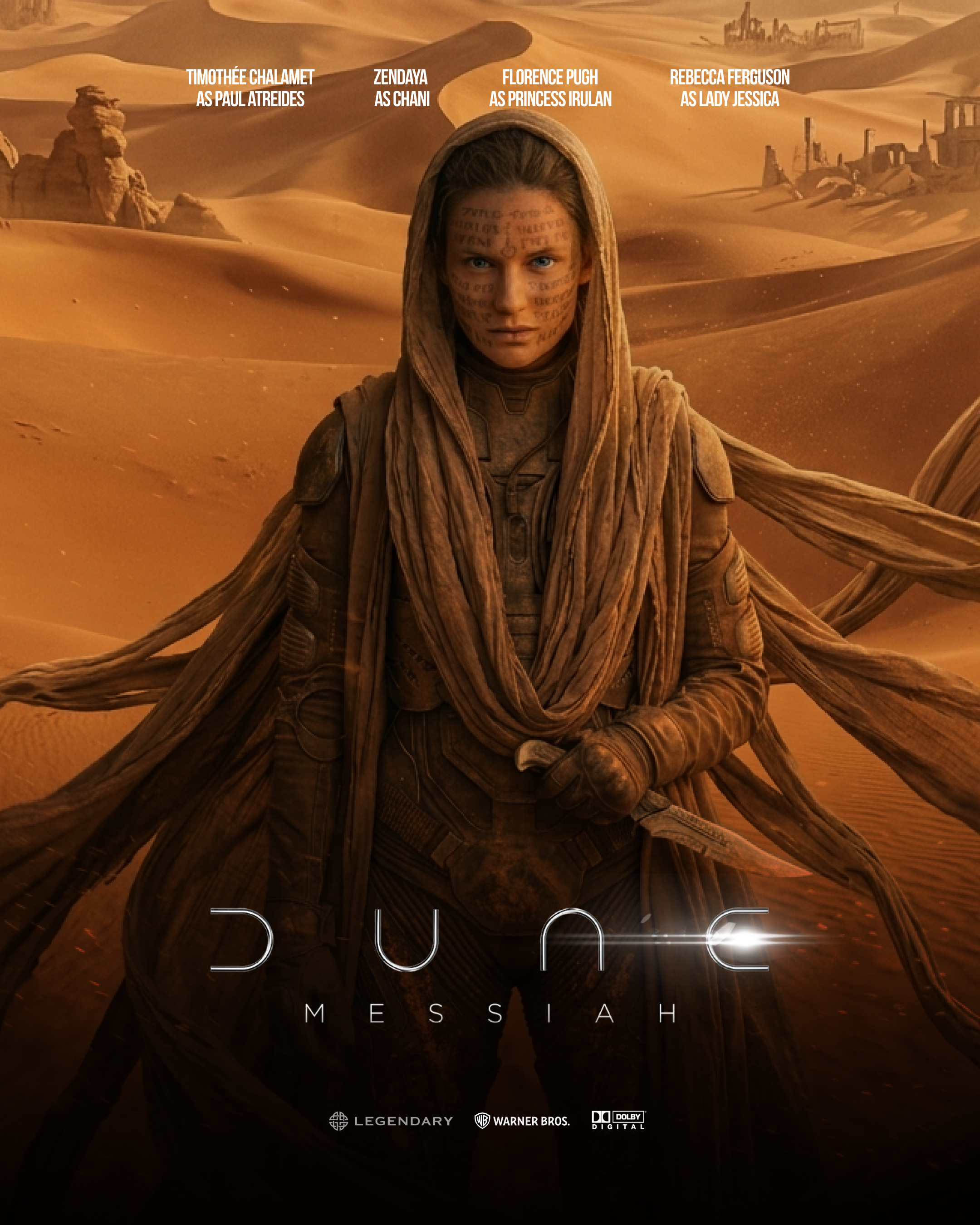
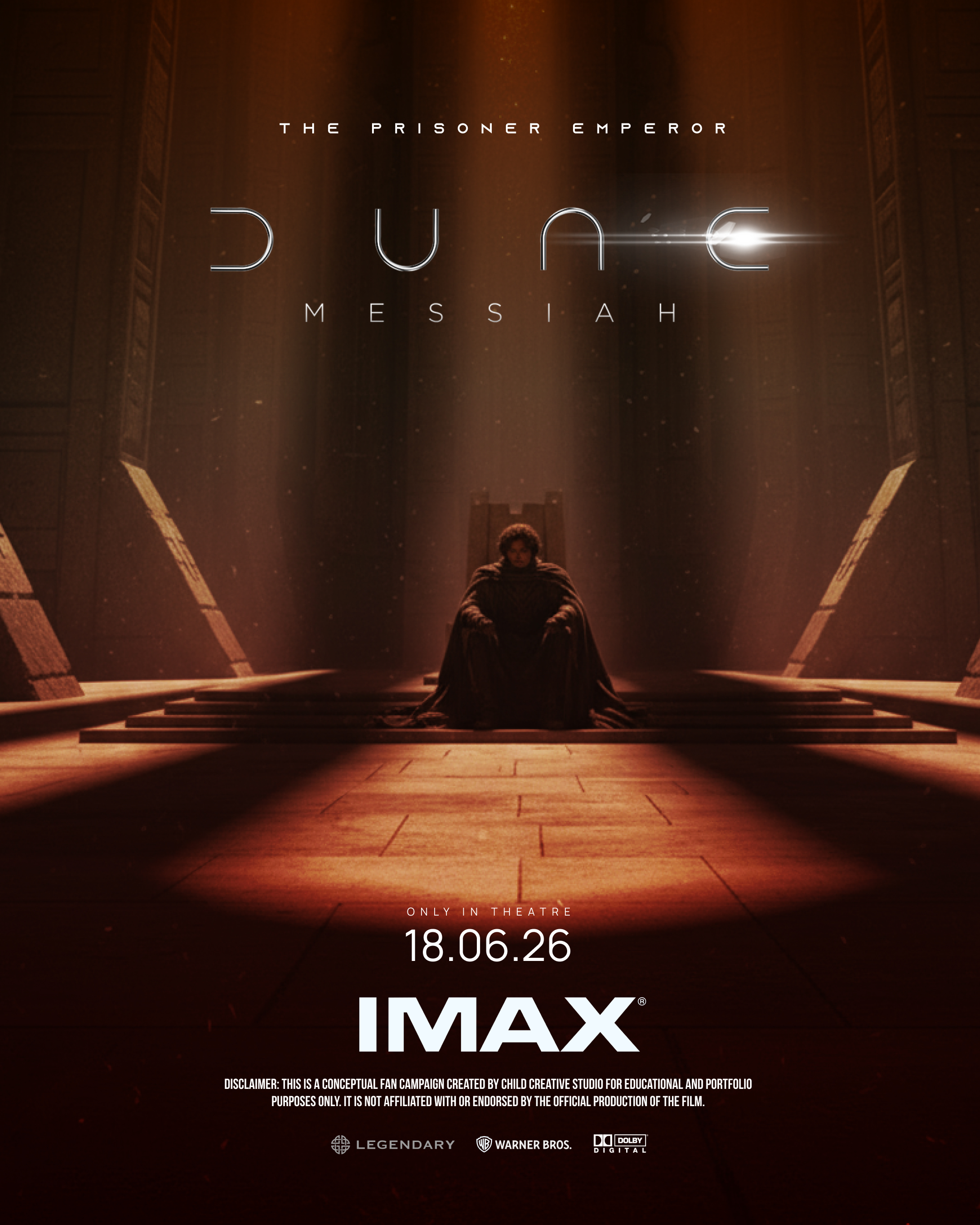
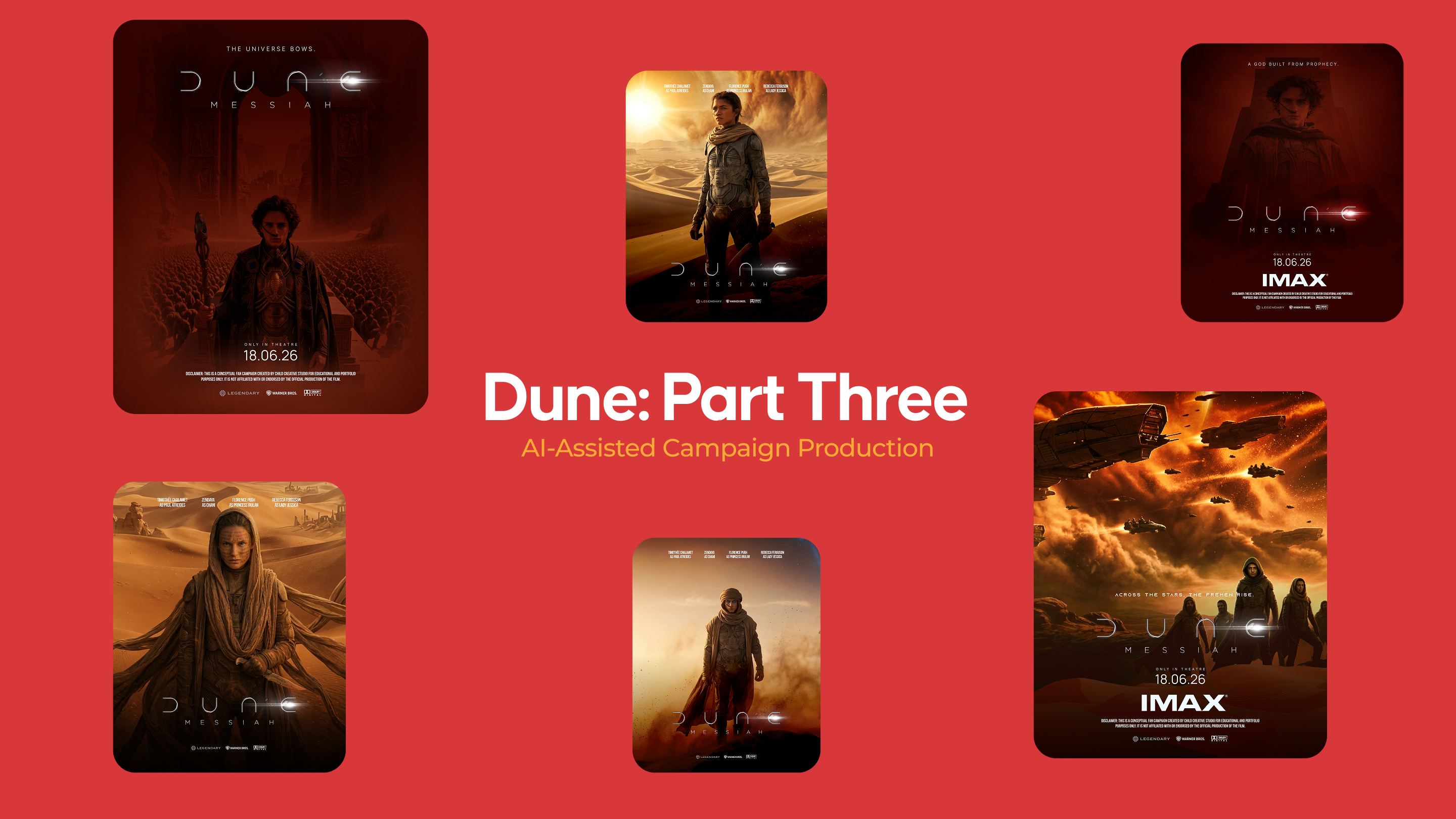
The final assets, six video concepts and eleven static designs, are the result of that full cycle: research, generation, assessment, correction, and refinement until each asset felt intentional rather than produced.
What We Produced
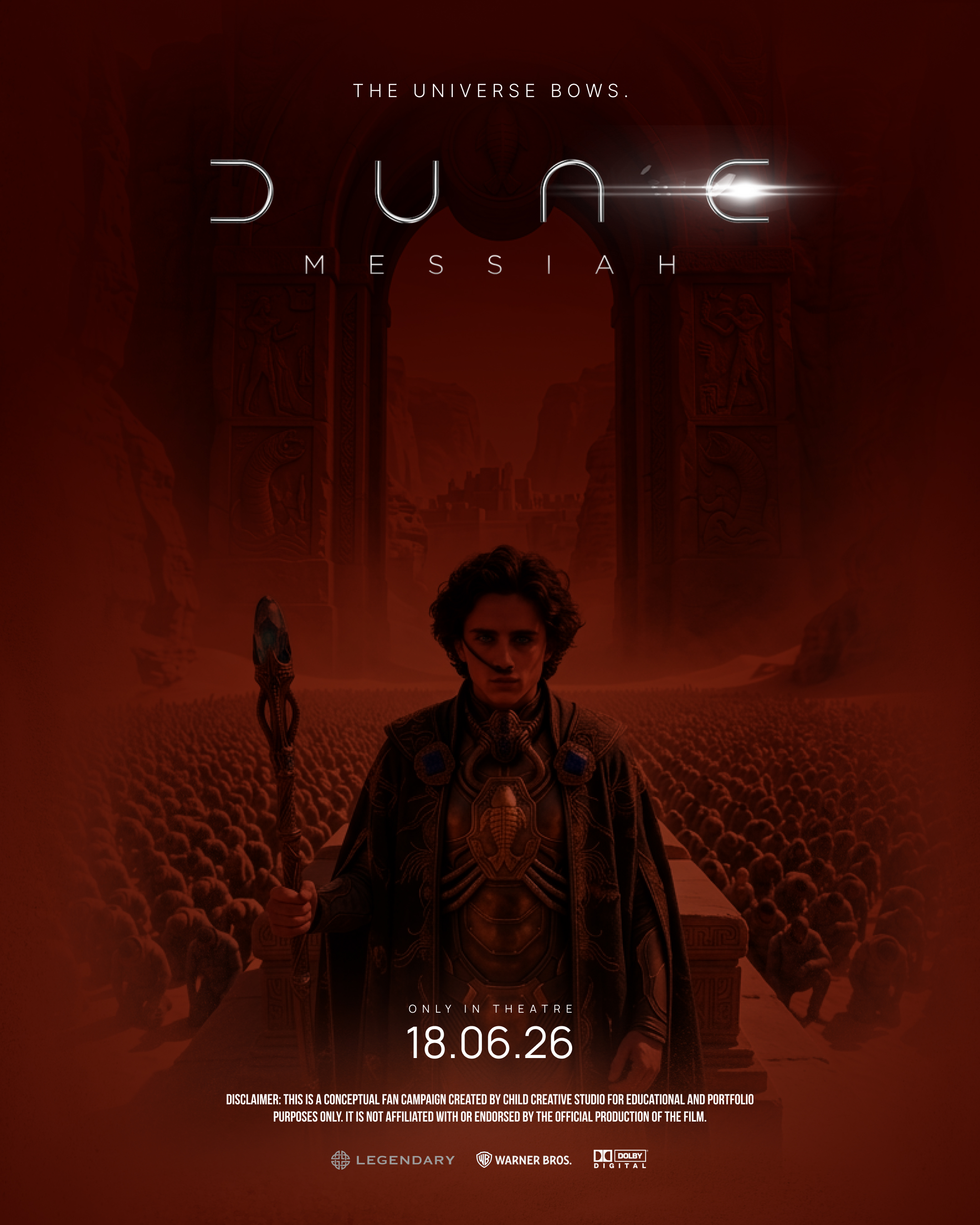
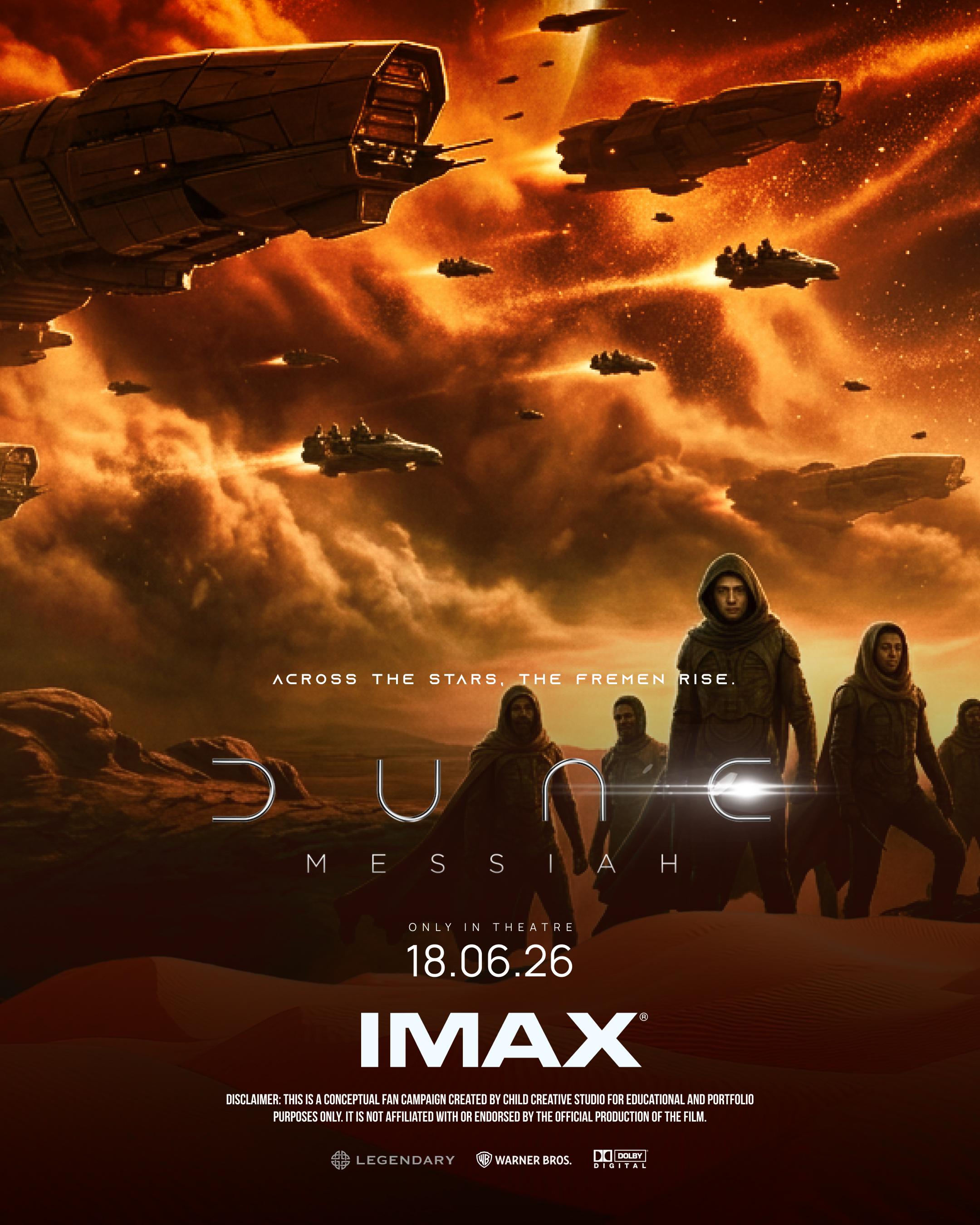
Six original video concepts and eleven static designs, built around campaign-style messaging – taglines and countdown copy designed to carry the tone of the franchise's marketing without reproducing it. Our first campaign post ran with the line "The holy war begins," a direct nod to where Part Two left off and the reckoning Part Three promises. Countdown-style messaging, including "Dune Messiah. Only in theatres from 18/06/2026," anchored the release date across formats.
Content has been rolling out across Instagram, Facebook, and LinkedIn, targeting UK and global audiences. Video content, in particular, has performed well on Facebook – an early signal that AI-assisted cinematic content has real traction even on platforms not traditionally seen as video-first for this kind of campaign work.
Where Things Stand
This campaign is still live. We're continuing to roll out content as Dune: Part Three's theatrical release approaches, and we'll be tracking performance across platforms to round out this case study with real engagement data.
What This Demonstrates
This project is a working answer to a question more clients are starting to ask: can you actually do this with AI, or are you just saying you can?
CHILD's answer is in the process – knowing how to direct AI tools toward a specific creative vision, and knowing exactly where AI's output needs a human hand to become production-ready. It's the same strategic insight we bring to a brand like AFRECC or an event like the Brit Mini Marathon, applied to a global film franchise, on our own terms.
This case study will be updated with performance data as the campaign concludes.
Looking Ahead
This campaign is still rolling out, and that's the point. It was never meant to be a one-off demo; it's an evolving record of what CHILD can build when AI is treated as a tool for craft, not a shortcut around it.
As Dune: Part Three's theatrical release approaches, we'll keep refining, posting, and tracking what works, adding real performance data to this case study as the campaign matures.
At CHILD Creative Studio, we don't just talk about AI in production. We put it to work and correct what it gets wrong.
Curious what AI-assisted production could look like for your brand? Let's build it together.
This is a self-directed creative showcase produced for portfolio purposes. CHILD Creative Studio is not affiliated with, endorsed by, or commissioned by Warner Bros., Legendary Entertainment, or the Dune franchise. All visuals and content referenced were independently created.